
Eco-Friendly & Sustainable Stickers: Materials, Benefits & What to Look For
- April 20, 2026
Sustainability is no longer a niche selling point — it is a baseline expectation for a growing number of consumers and businesses, and stickers are no exception. From product labels on organic skincare to branded packaging seals for an e-commerce store, the materials your stickers are made from send a message about your values before a customer even reads the text. This guide breaks down the eco-friendly sticker materials available today, the certifications that actually matter, and how to make greener choices without sacrificing durability or print quality. If you want to see the full range of premium and eco-conscious materials offered by StickerGenius, their materials page is a great place to start.
Why Eco-Friendly Stickers Matter
Traditional vinyl stickers are made from polyvinyl chloride (PVC), a petroleum-based plastic that does not biodegrade and releases harmful chemicals when incinerated. The adhesive backing, the release liner (that waxy sheet you peel off), and the laminate coating each add another layer of non-recyclable material. Multiply that by the billions of stickers produced globally each year, and the environmental footprint becomes significant.
Consumer sentiment has shifted to match the urgency. Studies consistently show that a majority of younger consumers, particularly Gen Z and Millennials, prefer brands that demonstrate environmental responsibility in their packaging choices. Nearly half of Gen Z shoppers say they would pay more for products packaged with sustainable materials. For businesses, switching to eco-friendly sticker materials is not just the right thing to do — it is a competitive advantage that builds trust and loyalty.
Eco-Friendly Sticker Materials: A Breakdown

Recycled Paper Stickers
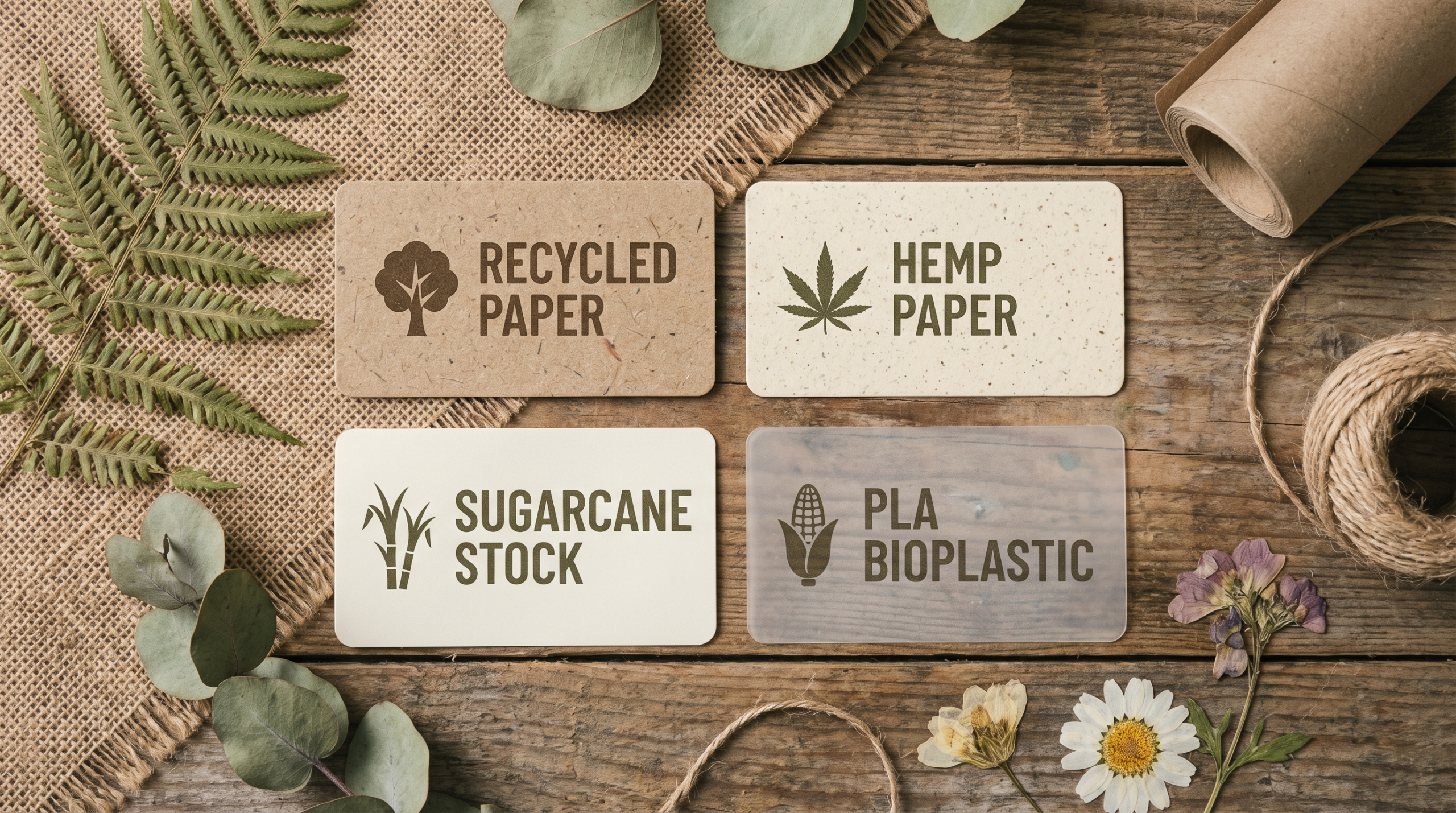
Recycled paper stickers are made from post-consumer waste (PCW) paper, meaning the raw material has already been used and diverted from a landfill. These stickers have a natural, uncoated look with a slightly textured finish that works beautifully for artisan brands, farmers market packaging, and handmade goods. They accept both inkjet and offset printing well, though color vibrancy is slightly lower than coated virgin paper. The adhesive can be water-based and removable, making recycled paper stickers a strong option for temporary labeling like seasonal promotions or event giveaways.
Sugarcane-Based (Bagasse) Stickers
Bagasse is the fibrous byproduct left after sugarcane is processed for juice or sugar. Rather than burning or discarding it, manufacturers can press it into a smooth, white label stock that looks and feels remarkably similar to conventional paper. Bagasse stickers are tree-free, which appeals to brands looking to reduce deforestation impact. They are also compostable under industrial conditions. Print quality is comparable to standard paper labels, making sugarcane-based stock a practical swap for product labels, mailer seals, and sticker sheets.
Hemp-Based Stickers
Hemp grows faster than trees, requires less water, and does not need pesticides to thrive, making it one of the most resource-efficient fibers on the planet. Hemp paper has a distinctive, slightly rough texture with visible fibers that gives stickers an organic, handcrafted look. It is naturally acid-free and resists yellowing over time. Hemp stickers are ideal for brands in the wellness, outdoor, and sustainability spaces where the material itself reinforces the brand story. Availability is more limited than recycled paper, and costs tend to run higher, but the environmental credentials are hard to beat.
PLA (Polylactic Acid) Bioplastic Stickers
PLA is a bioplastic derived from fermented plant starch, usually corn or sugarcane. PLA stickers have a glossy, plastic-like appearance that closely mimics traditional vinyl, which makes them appealing for brands that want an eco-friendly option without sacrificing the polished look of conventional stickers. They are industrially compostable, meaning they will break down in a commercial composting facility within 60 to 90 days, though they will not decompose in a backyard compost pile or a landfill. PLA is a strong choice for product packaging, retail stickers, and promotional labels where visual quality is a priority.
Soy-Based and Water-Based Inks
The substrate is only half the equation. The ink printed on the sticker also matters. Traditional petroleum-based inks contain volatile organic compounds (VOCs) that contribute to air pollution during printing. Soy-based inks, made from soybean oil, produce brighter colors, are easier to de-ink during recycling, and emit far fewer VOCs. Water-based inks are another low-impact option, commonly used in digital printing. StickerGenius uses odorless, non-toxic inks in their production process, which reduces both the environmental and health impact of the printing workflow.
Reusable and Repositionable Stickers
One of the most overlooked sustainability strategies is simply making stickers that last longer and can be reused. Repositionable stickers use a low-tack adhesive that allows them to be peeled and re-stuck multiple times without leaving residue. This eliminates the single-use cycle that sends billions of stickers to landfills each year. StickerGenius's StickleMe material, for example, is biodegradable, uses aqueous inks, and is designed for repeated use, making it one of the greenest sticker options on the market.
Certifications and Labels to Look For
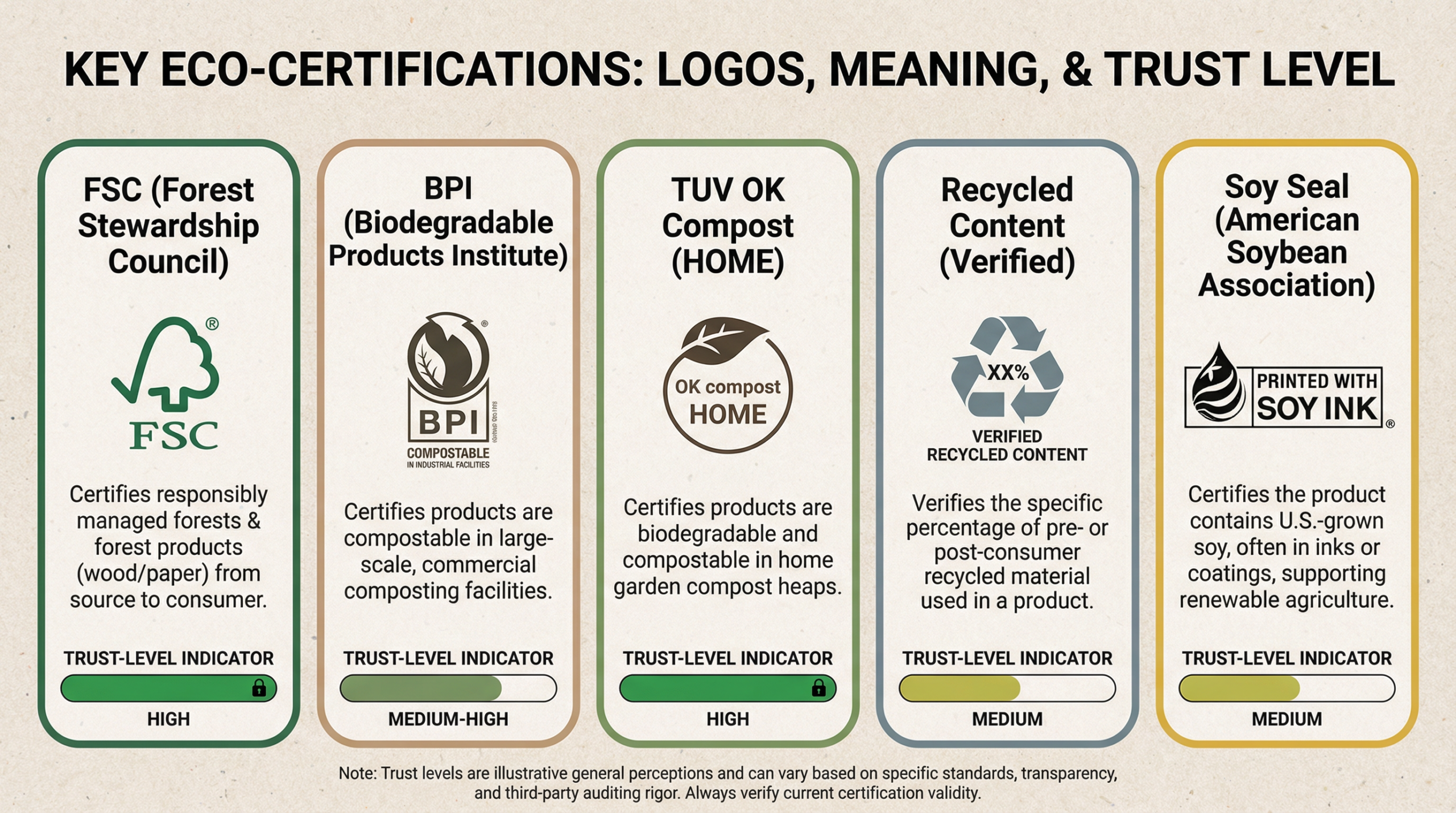
Not all "eco-friendly" claims are created equal. Greenwashing is rampant in the packaging industry, so knowing which certifications to trust is essential. Here are the ones that carry real weight:
- FSC (Forest Stewardship Council): Guarantees the paper comes from responsibly managed forests that provide environmental, social, and economic benefits.
- Compostable (BPI or TUV OK Compost): Certifies the material will break down in an industrial composting facility within a specific timeframe. Look for the BPI (Biodegradable Products Institute) mark in North America or TUV in Europe.
- Biodegradable: Means the material will decompose naturally over time, but without a composting certification this claim can be vague. Ask for specifics on conditions and timeframe.
- Recycled Content (PCW %): Indicates what percentage of the material is made from post-consumer waste. Higher PCW is generally better. 100% PCW is the gold standard.
- Soy Seal: Administered by the American Soybean Association, this mark confirms the ink formula meets minimum soy oil content requirements.
The Business Case: Consumer Demand for Sustainable Packaging
If the environmental argument alone is not enough, the business case is compelling. Packaging waste accounts for a substantial share of municipal solid waste in the United States. According to the U.S. Environmental Protection Agency (EPA), containers and packaging represent a major category of generated waste, with recycling and composting efforts saving over 193 million metric tons of carbon dioxide equivalent annually. Businesses that visibly commit to reducing their packaging footprint — even at the sticker level — align themselves with these broader waste-reduction goals.
Industry surveys consistently find that more than half of consumers have chosen a product specifically because of its sustainable packaging in the past six months. Brand loyalty follows, too: a significant portion of shoppers have switched to a competitor that offered greener packaging options. For small and mid-size e-commerce brands, every touchpoint matters, and stickers are one of the most visible and cost-effective ways to signal sustainability credentials.
How to Switch to Eco-Friendly Stickers Without Sacrificing Quality
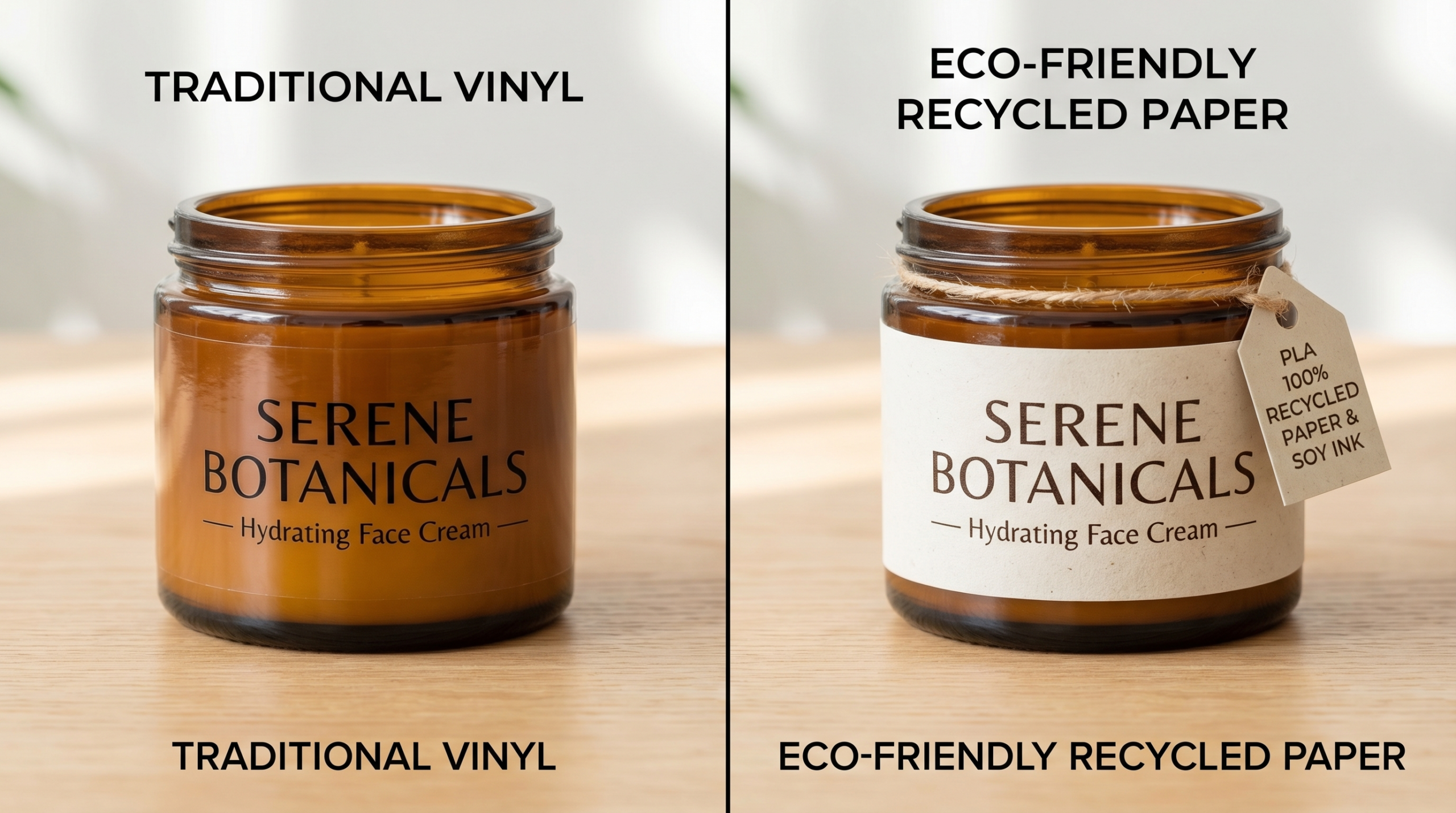
Transitioning to sustainable sticker materials does not have to be an all-or-nothing leap. Start by auditing your current sticker use. Which stickers are single-use and disposable? Those are your prime candidates for a swap to compostable or recycled materials. Which stickers need to last through shipping, handling, and shelf life? Those might benefit from a durable PLA bioplastic rather than paper.
Next, talk to your printer about material options. A good print partner will have samples you can touch and test before committing to a full run. Ask about adhesive options, too. Water-based adhesives are less harmful than solvent-based alternatives and work well for most indoor applications.
Consider the release liner as well. The silicone-coated backing sheet that protects the adhesive is one of the least-recycled components in the sticker supply chain. Some manufacturers now offer linerless labels or thinner liners made from recycled content. Every layer of the sticker that can be improved moves the needle.
Finally, communicate your choices to your customers. A small "printed on recycled paper with soy-based inks" note on your packaging or product page tells a story that resonates. Transparency builds trust, and trust builds repeat business.
Frequently Asked Questions
Eco-friendly stickers are made from sustainable materials such as recycled paper (post-consumer waste), sugarcane fiber (bagasse), hemp, or PLA bioplastic derived from corn or sugarcane starch. They are typically printed with soy-based or water-based inks instead of petroleum-based inks.
PLA bioplastic stickers closely match the glossy, durable look of traditional vinyl. Paper-based eco stickers (recycled, hemp, sugarcane) are best for indoor use and lighter-duty applications. For outdoor durability with an eco angle, look for reusable and repositionable materials that extend the sticker's useful life.
Key certifications include FSC (Forest Stewardship Council) for responsibly sourced paper, BPI or TUV OK Compost for compostability, and the Soy Seal for soy-based inks. Look for specific post-consumer waste (PCW) percentages in recycled materials — 100% PCW is the gold standard.
Not exactly. Compostable stickers (certified BPI or TUV) are guaranteed to break down in an industrial composting facility within a specific timeframe. Biodegradable simply means the material will decompose eventually, but without a certification, there is no guarantee of conditions or timeline.
Some sustainable materials carry a modest premium — typically 10 to 20 percent more than conventional vinyl — but the gap has been narrowing as demand increases. Recycled paper stickers are often price-competitive with virgin paper. The cost difference is frequently offset by improved brand perception and customer loyalty.
Every sticker your business prints is a tiny billboard for your brand, and the material it is made from is part of the message. Whether you start with recycled paper labels, switch to soy-based inks, or invest in fully compostable PLA stickers, the move toward sustainability does not have to compromise the look, feel, or durability your brand depends on. Ready to explore greener options? Browse StickerGenius's reusable and eco-friendly sticker collection to find materials that match your values and your vision. Their Stickologists are standing by to help you find the right sustainable solution for your project.
Free Shipping
All U.S. orders over $99 receive free shipping (Excluding Hawaii and Alaska). Expedited shipping options available.
No Minimum
Yes, that's correct. We will print any size order you need. Order quantity 1 or 1,000,000
Fast Turnaround
Standard turn around ships within a week. Request rush production for faster turnaround.
Made in the USA
All stickers proudly produced in The Genius Lab by our "Stickologist" just north of Detroit.