
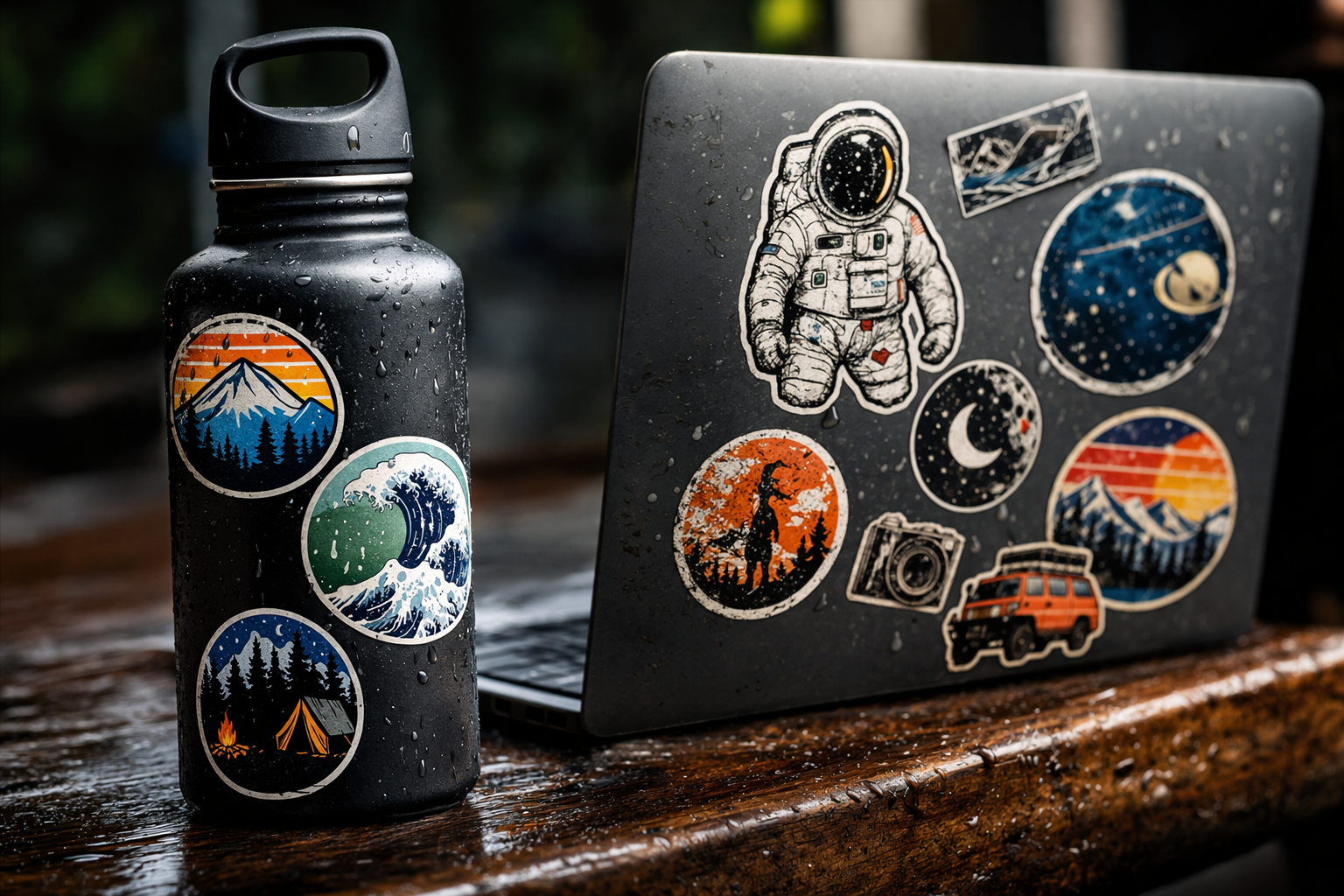
How Long Do Stickers Last? Indoor vs Outdoor Durability Explained
- April 6, 2026
One of the most common questions people ask before ordering custom stickers is simple: how
long will they last?
The answer depends on a few key factors: the material, where the sticker will be used, how
much wear it will get, and whether it is protected with a laminate. A sticker that lasts for years on
a laptop may not hold up the same way on a car, storefront window, or outdoor sign.
That is why understanding sticker durability matters before placing an order. Choosing the right
type of sticker helps ensure your design stays vibrant, adheres properly, and performs the way
you expect it to.
Whether you are ordering stickers for branding, packaging, vehicles, events, or personal use,
here is what you should know about indoor vs outdoor sticker durability.
Quick Answer: How Long Do Stickers Last?
If you want the short answer, here is a general guideline:
- Indoor stickers: often last several years
- Outdoor stickers: typically last 2–5+ years
- Vehicle decals: can sometimes last much longer with the right materials and
application
Of course, those are general estimates—not guarantees. The real answer depends on how and
where the sticker is used.
Why Sticker Durability Matters
Sticker durability is about more than whether the adhesive sticks.
It also includes how well the sticker resists:
- fading
- scratching
- peeling
- curling
- shrinking
- water damage
- wear from handling
For businesses, durability matters because stickers often represent your brand. If a sticker starts
peeling or fading too quickly, it can affect how polished and professional your product or
business appears.
For personal use, durability matters just as much. Whether it is going on a water bottle, laptop,
cooler, car, or toolbox, people want confidence that their sticker will actually hold up.
The good news is: with the right material and application, many stickers last far longer than
people expect.
Indoor vs Outdoor Stickers: What’s the Difference?
The biggest factor in sticker lifespan is where the sticker will live.
Indoor stickers
Indoor stickers are usually protected from harsh conditions. They are not constantly exposed to:
- direct sunlight
- rain or snow
- major temperature swings
- heavy moisture
- road grime or dirt
Because of this, indoor stickers generally last much longer visually and structurally.
Outdoor stickers
Outdoor stickers need to withstand much tougher conditions, including:
- UV exposure
- rain and humidity
- freezing temperatures
- summer heat
- wind and weather
- repeated washing or handling
That is why outdoor-rated stickers are typically made with more durable materials, stronger
adhesives, and protective laminate.
A sticker designed for indoor use may look similar at first, but it will usually wear out much faster
if used outside.
How Long Do Indoor Stickers Last?
Indoor stickers can often last many years, especially when applied to clean, smooth surfaces
and not exposed to constant friction.
Some common indoor uses include:
- product packaging
- laptops
- water bottles
- notebooks
- office walls
- folders
- equipment labels
- decorative surfaces
If a sticker is placed somewhere low-contact—such as a display, wall, or storage container—it
may show almost no visible wear for a very long time.
If it is placed on something handled daily, like a laptop or tumbler, it may still last for years but
naturally show wear sooner.
In general, indoor use is the easiest environment for sticker longevity.
How Long Do Outdoor Stickers Last?
Outdoor stickers usually last 2 to 5 years, and sometimes much longer, depending on the
quality of the material and the conditions they face.
Outdoor durability depends on factors like:
- how much direct sunlight the sticker gets
- whether it is laminated
- what surface it is applied to
- how often it gets washed or handled
- how extreme the local weather is
For example:
- A car decal parked outside every day in direct sun may wear faster.
- A window decal in a shaded storefront may last longer.
- A bumper sticker exposed to road salt and car washes may age differently than one on a
side window.
So while 2–5 years is a solid general expectation, real-world lifespan can vary quite a bit.
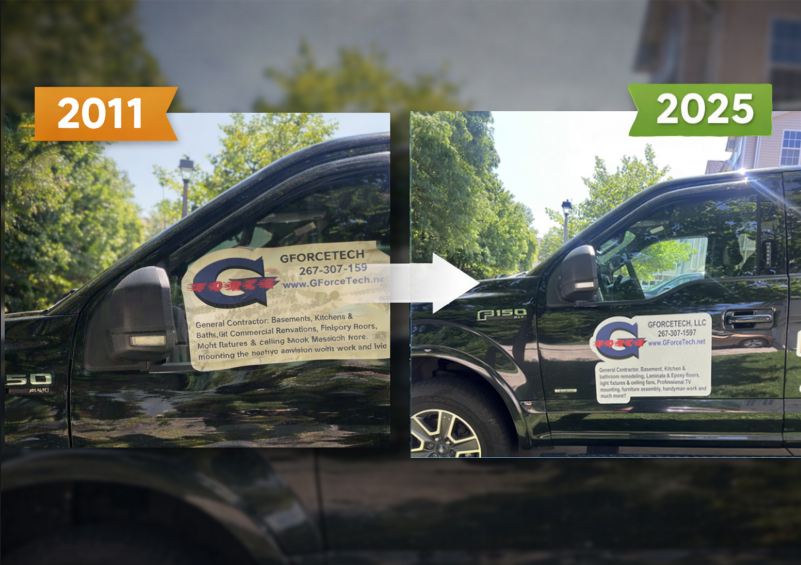
Real-World Example: We’ve Seen a Car Sticker Last 14
Years
This is where sticker durability gets interesting.
While most outdoor stickers are generally expected to last a few years, real-world performance
can go well beyond that when the right materials and conditions come together.
We have actually had a customer with a car sticker that lasted 14 years.
That decal stayed on through years of driving, sunlight, weather exposure, and normal
wear—far longer than most people would assume a sticker could last.
That does not mean every sticker will last 14 years. It depends on the environment, the
material, the laminate, and the application. But it is a great example of what high-quality sticker
production can do when everything is working in your favor.
If you have ever assumed stickers are only temporary, examples like this prove that they can be
surprisingly durable.
The Material Makes a Huge Difference
Not all stickers are made from the same material, and that plays a major role in how long they
last.
Vinyl stickers
Vinyl is one of the most durable sticker materials available. It is a popular choice because it is:
- flexible
- water-resistant
- durable
- well-suited for indoor and outdoor use
Vinyl stickers are commonly used for:
- cars
- windows
- water bottles
- laptops
- equipment
- product branding
- outdoor signage
If durability matters, vinyl is usually the safest choice.
Paper stickers
Paper stickers can work well for certain applications, especially packaging or short-term indoor
use. But they are generally less durable than vinyl and are more likely to be affected by:
- moisture
- tearing
- surface wear
- handling
Paper stickers are often a good fit when long-term durability is not the main goal.
Specialty materials
Materials like:
- clear vinyl
- holographic vinyl
- metallic stickers
- matte-finish vinyl
can also be highly durable when paired with the right construction and protective finish.
Lamination Can Extend Sticker Life Significantly
If you want stickers to last longer, lamination matters.
A laminate is a protective layer placed over the printed sticker surface. It helps protect the
design from:
- scratches
- moisture
- oils from handling
- fading
- everyday wear
Gloss laminate
Gloss laminate tends to make colors look richer and more vibrant. It is a strong option for
outdoor use, bold branding, and high-visibility designs.
Matte laminate
Matte laminate offers a softer, more muted finish. It still provides protection, but with a less
reflective look.
For stickers that will be used outdoors or handled frequently, laminate is often one of the biggest
factors in how long they continue looking good.
Sunlight and UV Exposure Are a Big Deal
One of the fastest ways to shorten sticker lifespan is constant direct sunlight.
UV rays gradually break down printed pigments over time, which can lead to:
- fading
- washed-out colors
- reduced contrast
- uneven aging
This matters most for stickers used on:
- vehicles
- storefront windows
- outdoor signs
- equipment
- mailboxes
- bumper stickers
A UV-protective laminate can help reduce this wear significantly.
This is also why two identical stickers can age very differently. A sticker used indoors or in
shade may still look great years later, while one in full sun every day may fade much sooner.
Weather and Moisture Matter Too
Outdoor stickers are not just fighting sunlight. They are also exposed to the elements.
That includes:
- rain
- snow
- humidity
- heat
- cold
- temperature swings
These conditions can affect both the printed surface and the adhesive over time.
A well-made outdoor vinyl sticker is designed to handle these conditions much better than a
lower-grade indoor label. But even then, the environment still matters.
A sticker in a mild climate may outlast one in an area with extreme sun, harsh winters, or
constant moisture.
That is why outdoor durability is never just about whether a sticker is “waterproof.” It is about
whether the entire construction is designed for long-term exposure.
Daily Wear Can Break Down Stickers Faster Than You
Think
A lot of sticker wear has nothing to do with weather.
Sometimes the biggest factor is simply how often the sticker gets touched, rubbed, washed,
or bumped.
Think about stickers placed on:
- reusable water bottles
- coolers
- laptops
- helmets
- toolboxes
- tumblers
- storage bins
These surfaces get handled constantly. They may be tossed in bags, cleaned repeatedly,
scraped against surfaces, or exposed to oils from hands.
That kind of wear adds up over time.
This is why a sticker on a display sign may stay pristine much longer than one on a daily-use
tumbler—even if both are technically “indoor” stickers.
The Surface You Apply It To Matters
Even the best sticker will struggle if it is applied to the wrong surface.
The best surfaces for long-lasting adhesion are usually:
- smooth
- clean
- dry
- non-porous
Examples include:
- glass
- metal
- smooth plastic
- painted smooth surfaces
Surfaces that are more difficult for stickers include:
- rough textures
- dusty materials
- unfinished wood
- oily surfaces
- certain low-energy plastics
If the adhesive cannot make full contact with the surface, the sticker is more likely to lift, peel, or
fail earlier than expected.
That is why surface prep matters more than most people realize.
How to Make Stickers Last Longer
If you want your stickers to hold up as long as possible, a few small steps can make a big
difference.
- Clean the surface first
Remove dust, oils, or residue before applying the sticker. - Apply to a dry, smooth area
The cleaner and smoother the surface, the better the adhesive bond. - Use the right sticker for the environment
Do not use indoor labels for outdoor applications. - Add laminate if durability matters
For cars, bottles, laptops, windows, or frequent handling, laminate is worth it. - Give the adhesive time to set
After application, allow the sticker time to bond before exposing it to heavy moisture or wear.
These small details can dramatically improve sticker performance over time.
So, How Long Should a Sticker Last?
The better question is not just “how long do stickers last?”
It is:
How long do you need your sticker to last?
That answer changes everything.
For example:
- A packaging seal may only need to last through shipping and delivery.
- A product label may need to last for months.
- A water bottle sticker may need to survive years of daily use.
- A car decal may need to hold up through weather and sun long-term.
- A promotional event sticker may only need short-term durability.
Once you know the use case, it becomes much easier to choose the right material and finish.
That is what leads to better performance—and fewer surprises later.
Final Thoughts: Durability Starts with Choosing the Right
Sticker
No sticker lasts forever. But the right sticker can absolutely last for years—and in some cases,
much longer than people expect.
Sticker lifespan depends on the combination of:
- material
- laminate
- environment
- application surface
- wear and handling
When those factors are matched correctly, stickers become much more than temporary
graphics. They become reliable, long-lasting tools for branding, promotion, packaging, and
everyday use.
If durability matters for your project, the best place to start is by thinking about where the
sticker is going and what it needs to withstand.
That is what separates a sticker that simply looks good from one that actually performs.
Free Shipping
All U.S. orders over $99 receive free shipping (Excluding Hawaii and Alaska). Expedited shipping options available.
No Minimum
Yes, that's correct. We will print any size order you need. Order quantity 1 or 1,000,000
Fast Turnaround
Standard turn around ships within a week. Request rush production for faster turnaround.
Made in the USA
All stickers proudly produced in The Genius Lab by our "Stickologist" just north of Detroit.